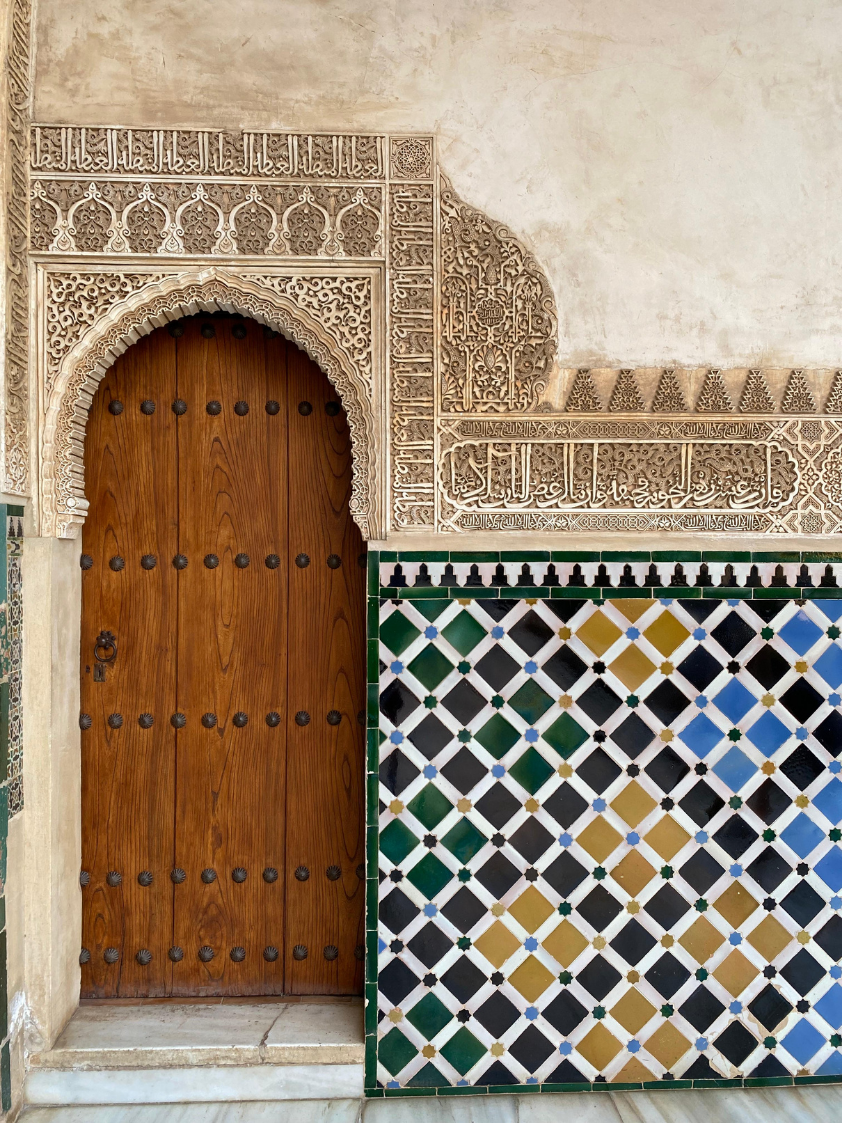
Following the European siege and capture of the Holy City on July 15, 1099, the Latin Kingdom of Jerusalem and the rest of the "Crusader states"—the County of Edessa, the County of Tripoli, and the Principality of Antioch—were definitively established. The Latin presence in Outremer (Old French for “Overseas”) persisted until 1291, when the Crusaders were ultimately expelled by the armies of Sultan Khalīl (1263-1293), an event that concluded the history of the Crusader states in the Holy Land. Throughout these two centuries of Latin rule, new social actors—many of them originally from Europe—settled in Syria and Palestine, generating a rich and intense combination of elements and knowledge from the diverse cultures of the Mediterranean.
Following the European siege and capture of the Holy City on July 15, 1099, the Latin Kingdom of Jerusalem and the rest of the “Crusader states”—the County of Edessa, the County of Tripoli, and the Principality of Antioch—were definitively established. The Latin presence in Outremer (Old French for “Overseas”) persisted until 1291, when the Crusaders were ultimately expelled by the armies of Sultan Khalīl (1263-1293), an event that concluded the history of the Crusader states in the Holy Land. Throughout these two centuries of Latin rule, new social actors—many of them originally from Europe—settled in Syria and Palestine, generating a rich and intense combination of elements and knowledge from the diverse cultures of the Mediterranean.

However, a common assumption in the study of medieval history is the association of the historical phenomenon of the Crusades with European intolerance and the rejection of the Eastern societies of the Holy Land. Viewed in this light, the Latin establishment in the Middle East between the 12th and 13th centuries has often been characterized by the segregation of local populations and the rejection of knowledge regarding the social and natural world produced by local figures and institutions. Similarly, a lack of interest in the training and production of knowledge among the Latin population in the East during the Crusades has been assumed. However, in recent decades, this perspective has begun to be challenged and replaced by new approaches that focus on the constitution within the Crusader states of a dynamic network of knowledge exchange that served as a suitable environment for medieval scientific development. If we concentrate on the scattered evidence concerning medical science and the presence of medical practitioners, we can afirm the importance of men and women dedicated to the art of healing in these territories. Professionals of European origin arrived in the Palestinian territories and collaborated with local doctors, forming a professional environment mutually enriched by diferent traditions of knowledge and shaped through encounters with people from diverse cultural backgrounds. Indeed, we have diferent testimonies of physicians requested for their services regardless of their nationality. For example, there was a case where a local physician was employed at the court of a Frankish king in Outremer. A native of Jerusalem, Abū Sulaymān Dāwūd gained notable fame as a physician and astrologer in Fatimid Egypt. Towards the end of 1160, he agreed to treat Baldwin’s leprosy ‒ the future Baldwin IV (1161-1185) ‒ after King Amalric I (1136-1174) requested that his Egyptian allies send distinguished doctors to cure his son’s illness.
Similarly, it occurred that European doctors were requested by the Muslim nobility. This was the case with Benvenutus Grapheus of Jerusalem (ca. 1200-ca. 1290). An ophthalmologist of the late Middle Ages, he authored a treatise entitled Ars probatissima oculorum, which circulated widely in Latin and several vernacular languages. This physician is a compelling example of a professional of European origin who reportedly worked for an Arab sultan and, furthermore, was invited to compile a specialized volume of his knowledge by a certain “Master of Damascus.
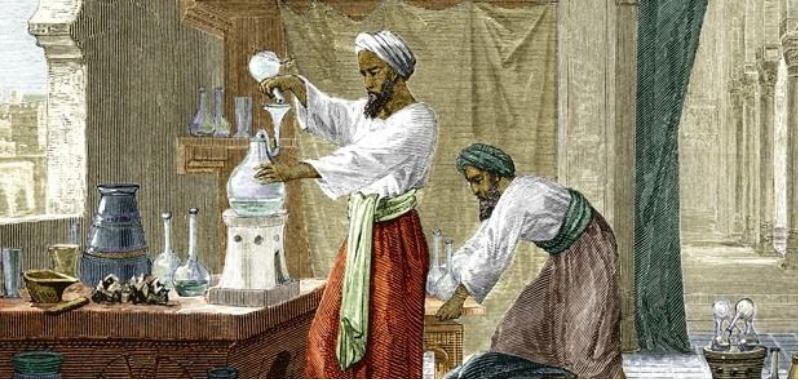
This interest in the expertise of a European professional not only challenges the common historiographical interpretation regarding the training inferiority of Western doctors, but also encourages us to view the circulation of medical knowledge as multifaceted and diverse. The fact that a professional from Damascus could take interest in the work of a European doctor who had practiced in the Latin Eastern states demonstrates the complexity of these intellectual exchanges. Therefore, we may afirm that the preferences for medical professionals based solely on geographical origin often reflect historiographical assumption rather than historical reality. In the same sense, the production and circulation of scientific texts is an aspect that highlights the value of the Latin world of Syria and Palestine for the appropriation and production of knowledge and intellectual practices. In this regard, for example, an Arabic manuscript from the year 1196 has been found — a copy that included The Hundred Books of the Medical Art by Abū Sahl al-Masīḥī (d. ca. 1010?) — which clearly expresses the interest that Latins in the Holy Land had in reading Eastern medical texts. Another interesting example can be found in the medical legislation of the Crusader states. There were two articles within the Assises de la Cour de Bourgeois ‒ the code that legislated on the activities of the free population in the Latin Kingdom of Jerusalem that was not part of the nobility ‒ which regulated the practice of doctors. Its composition would have derived from more than one legal model, but various elements of Syrian legal custom likely served as the model for the medical section of the Assises de la Cour de Bourgeois. Indeed, it has been pointed out that this model was the manual of Muslim civil legislation called ḥisbah. This consisted of a varied set of regulations on diferent activities carried out in cities under Muslim rule, from commercial transactions to the civil activity of various professionals. The muḥtasib was the oficer in charge of ensuring this legislation was followed. This aspect reinforces the idea that the ḥisbah could be the substrate of the Assises due to the fact that in the Latin Kingdom, the responsibility to ensure that a doctor, among other professionals, met certain standards in his or her work practice was the job of the mathessep, an assistant of the viscount of the Cour des Bourgeois. The functions of the Muslim and the Frankish oficials were the same, and the similarity in the names indicates the efort to adapt the Arabic term into the Old French to name the same oficial that the Franks inherited from the Arab administration and legislation.
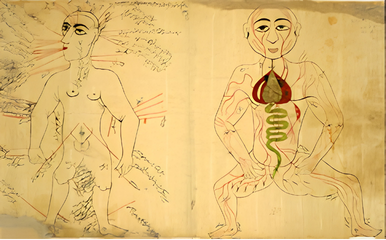
In conclusion, following the European capture of Syria and Palestine at the end of the First Crusade (1099), a unique society emerged in the East that combined a series of elements from the diferent cultures of the Mediterranean world. This convergence facilitated the circulation and integration of texts, practices, and knowledge that enriched the professional medical work of the doctors who settled in the Holy Land, regardless of their geographical origin. According to the testimonies inherited from this period in the Latin world of Outremer, a rich medical and scientific culture emerged that contributed to the development of professionals and institutions dedicated to the art of healing by combining elements from the various traditions with which they came into contact.