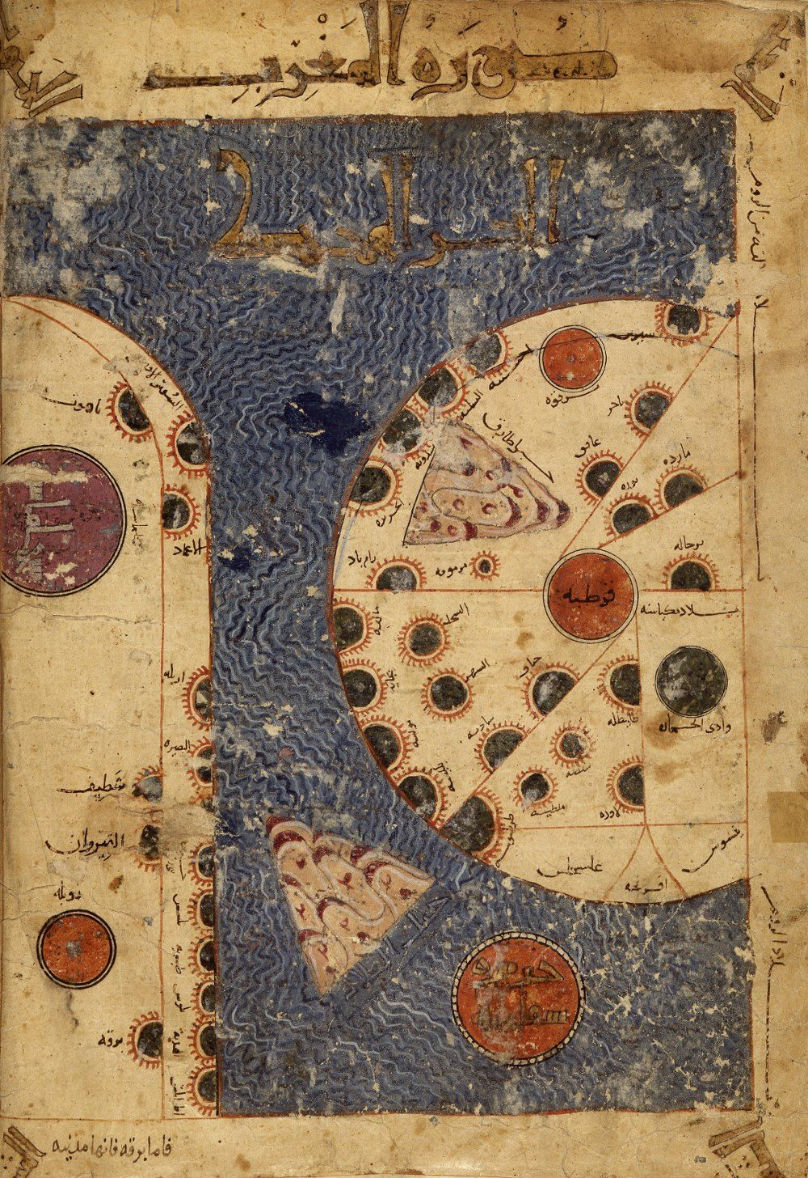
Al-Andalus encompasses several significant features. However, owing to its historical background, its development as a multireligious society and its diverse cultural characteristics that fostered religious diversity, it can be considered a cornerstone for examining interactions between cultures and religions from both historical and psychological perspectives. To understand the events that occurred in al-Andalus during Muslim rule, it is necessary to consider the region’s historical background.
Al-Andalus encompasses several significant features. However, owing to its historical background, its development as a multireligious society and its diverse cultural characteristics that fostered religious diversity, it can be considered a cornerstone for examining interactions between cultures and religions from both historical and psychological perspectives. To understand the events that occurred in al-Andalus during Muslim rule, it is necessary to consider the region’s historical background.
Al-Andalus emerged in the early eighth century. The conquest of al-Andalus (then known as Muslim Iberia) took place in 711, when Muslim Arab and Berber armies under the command of Ṭāriq ibn Ziyād conquered the Visigothic kingdom that ruled there. This marked the beginning of Muslim rule in al-Andalus, which would last for eight centuries.
That long period enabled the emergence and development of various cultures, religions, and forms of diversity in Muslim Iberia. Considering the importance of these forms of diversity, this period of al-Andalus under Muslim rule represents an extensive time span that offers valuable perspectives and values from religious, cultural, and psychological standpoints.
In this context, this essay argues that such diversity not only facilitated interaction but also shaped identity formation in complex ways. Therefore, it is necessary to briefly address some of these values.
One of the most crucial features for understanding the context of al-Andalus in that period is the multireligious lifestyle in the region. It is not just a social condition but a broad concept that shapes both the region and the people who live in it in terms of identity and psychology. During the reign of Muslims in al-Andalus, various religious communities existed, such as Jews and Christians. Religion may be the main factor shaping people’s lives, because different religions and faiths offer distinct ways of life to their believers. Therefore, living with diverse lifestyles and beliefs is a highly complex situation; even today, there is still a tendency for people to live with others who share similar beliefs. From this perspective, it is reasonable to assume that living within this “convivencia” in that period was much more difficult than it is under today’s conditions. This complexity highlights that coexistence was not merely harmonious but also psychologically demanding for individuals.
After addressing one of the most important aspects of the societal structure of al-Andalus, it is now necessary to clarify what “convivencia” means. The term convivencia (Spanish for “living together”) is commonly used by scholars to describe the coexistence of Christians, Muslims, and Jews in medieval Spain (Islamic Spain), as well as the cultural interaction fostered by their proximity. The concept was introduced by the Spanish historian Américo Castro in 1948, who portrayed al-Andalus as a “utopian multireligious society in perfect harmony.” This can be considered a definition of convivencia; however, this interpretation has been widely questioned in modern scholarship. The reason behind these debates lies in the arguments of some modern scholars, who claim that the coexistence of different faith communities did not necessarily mean a completely peaceful and unproblematic atmosphere, but rather a complex and at times conflictual situation. Therefore, convivencia should be understood as a complex and dynamic process rather than a purely harmonious condition.
Despite these debates, this vibrant interaction among different groups led to increased cultural and scientific developments. In particular, scientific activities gained momentum through the collaborative work of scholars from different backgrounds. For example, translation movements in the Toledo School contributed to the sharing of knowledge in philosophy, science, and medicine. These interactions also gave rise to significant social, cultural, and economic exchanges in daily life. Thus, coexistence not only created tension but also fostered intellectual and cultural productivity.
Consequently, from a contemporary perspective, al-Andalus is now being examined through a more nuanced lens, highlighting its rich cultural heritage and diversity. In the light of these insights, it is crucial to analyze this model of coexistence, including the underlying tensions it harbored and its impact on individual psychology, identity formation, and, consequently, the construction of societal identity. This perspective allows for a more balanced understanding.
Furthermore, the main issue regarding the position of people in al-Andalus, as indicated in the title, is the psychological approach to convivencia. It is necessary to approach these events from both their positive and negative aspects, especially in cases where people live in coexistence, such as in al-Andalus. From this perspective, the psychological dimension becomes central, raising several questions: How are individuals affected by such complex societal conditions? More specifically, how do situations such as living in a multi-religious society affect the psychology and identity development of individuals and, consequently, of society? At this point, Social Identity Theory in psychology may be beneficial in seeking answers to these questions. In particular, this theory provides a framework for understanding group-based distinctions within such a society. This theory attempts to explain individuals’ tendency to define themselves based on their nationality, religion, or the social class to which they believe they belong. It suggests that people seek to enhance their self-esteem by joining certain groups. As a result, individuals tend to identify with and feel a sense of belonging toward their own group, while simultaneously experiencing a sense of alienation toward groups to which they do not belong. This process leads to a distinction between “us” (the in-group) and “them” (the out-group).
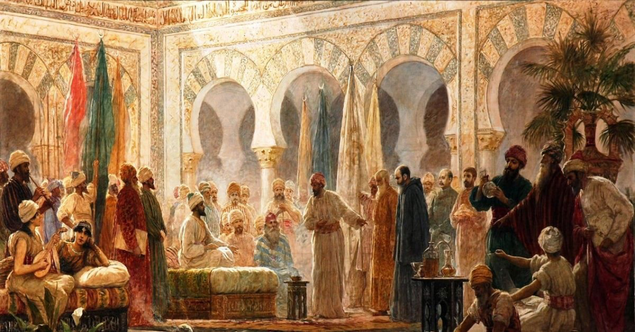
Therefore, this in-group favoritism creates distinctions among people living in a multi-religious society, which is precisely what makes al-Andalus both a vibrant and a complex context. However, the positive aspects of this situation should also be considered, as such categorizations can reduce cognitive load while sharpening the boundaries between groups. In this context, identity formation in al-Andalus emerges as a key issue.
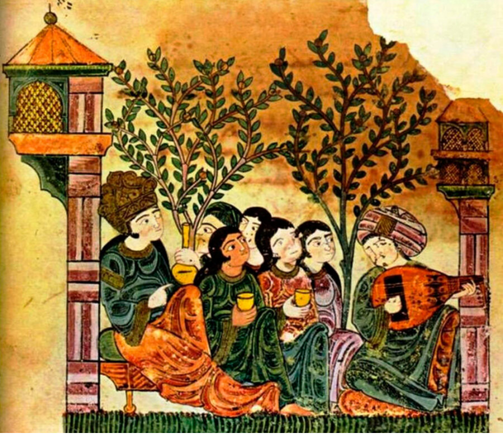
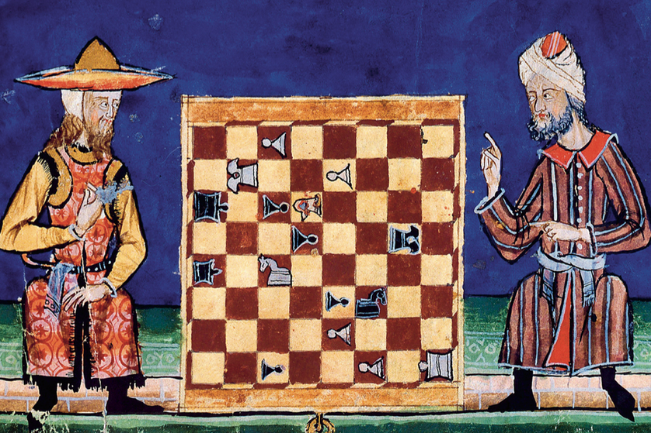
Moreover, al-Andalus was a distinguished example of diverse coexistence, but it also offered a strict social structure with a dynamic character. With these distinct features of its social structure, al-Andalus shaped people’s identities through different categorizations. In other words, the social structure played a direct role in shaping identity boundaries. As in every society, al-Andalus also had some dominant figures, like Muslims. During that period, while al-Andalus was under the rule of Muslims, Muslims were the elite group of administrators in the society. However, it must also be noted that this group was internally differentiated, with stratification among Arabs, Berbers, and Muwallads (indigenous converts to Islam), indicating the presence of hierarchical structures within Muslim society itself. Furthermore, when discussing the construction of this social identity, it is necessary to address the situation of non-Muslims as well. For example, Christians and Jews were protected under the status of dhimmīs but were naturally regarded as a minority. However, they were granted the space to preserve their identities, and scholars from the non-Muslim population were also valued; indeed, Muslim and non-Muslim scholars worked together on translation activities, which was highly significant in supporting the construction of a shared culture and, identity. Consequently, in al-Andalus, a rigid hierarchy was established by clearly defining inequalities among identity groups, yet at the same time, religious and ethnic diversity allowed for complex interactions and a certain degree of mobility (particularly among Muslims).
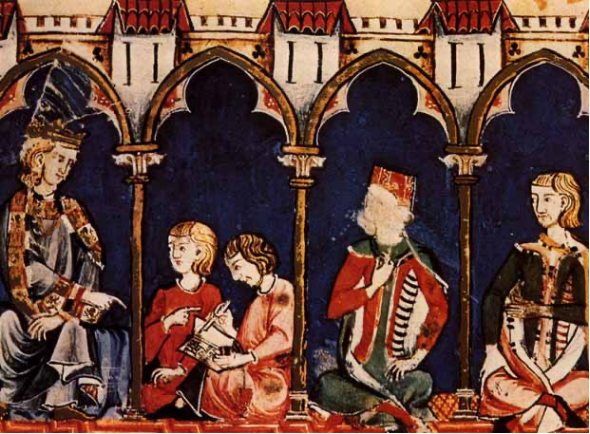
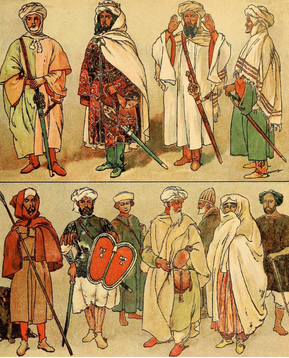
After discussing these topics, the psychological dimensions and positive reflections of this multicultural, religious, and coexistent society should also be considered. In this context, “The Contact Hypothesis” in modern psychology can be applied. It suggests that contact between groups can reduce prejudice and increase empathy among individuals. According to Gordon Allport, who first developed the theory, there are four conditions necessary for this hypothesis to hold: equal status, common goals, cooperation, and institutional support. In this way, common ground can be found within a social structure that includes many different groups, and personal judgments and divisive perspectives can be set aside, thereby strengthening empathy and a sense of coexistence. From this perspective, al-Andalus can be partially interpreted as a setting in which these conditions were at times met, allowing coexistence to function over long periods. From this perspective, the granting of certain rights to different groups in al-Andalus, along with efforts to establish a degree of equality, helps explain how coexistence was sustained over long periods.
In conclusion, in the light of all these aspects, al-Andalus may be defined as a historical laboratory where identity can serve as both a barrier and a bridge. Thus, it can be argued that al-Andalus illustrates the dual nature of identity in a multi-religious society. It can be said that this period in history (711–1492) has taught us just how critical a role the “Andalusian identity,” a superordinate identity, played in ensuring harmony within such societies. Consequently, life, with all the diverse groups it encompasses and the various perspectives on their influence, is not a static state; on the contrary, it is an active, dynamic process that is constantly evolving, and must be sustained through tolerance and cooperation in a delicate balance. Therefore, coexistence should be understood not as a fixed ideal, but as a continuous and negotiated process.
Bibliography
- Akasoy, Anna. 2010. “Convivencia and Its Discontents: Interfaith Life in al-Andalus.” International Journal of Middle East Studies 42 (3): 489–499.*
- Al-Khalafat, Khaled Suleiman. 2023. “Al-Andalus as a Symbol of Islamic Religious Tolerance.” English Linguistics Research 12 (2): 28–36.*
Çağış, Zafer Güney. 2022. “Ötekiliği Kucaklamak: Mega-üst Kimlikler, Sosyal Kategorizasyon ve Gruplar Arası İlişkiler.” Nesne Psikoloji Dergisi 10 (24): 278–293.
Chak, Farhan Mujahid. 2009. “La Convivencia: The Spirit of Co-existence in Islam.” Islamic Studies 48 (4): 567–590.
Kocaman, Neslihan ve Murat Özcan. “Çok Kültürlülükte Kimlik Anlayışı ve Endülüs İspanyasındaki Yansımaları.” Uluslararası Dil, Edebiyat ve Kültür Araştırmaları Dergisi (UDEKAD) 7 (1): 20–32, 2024.
Marín-Guzmán, Roberto. “Ethnic Groups and Social Classes in Muslim Spain.” Islamic Studies 30 (1/2): 37–66, 1991.
Öztürk, Tuğba. “Toledo Koleksiyonu: Sebepleri ve Sonuçlarıyla İlk Oryantalist Çalışmalar”. Milel ve Nihal 12 (1): 55-80, 2016.
Perkins, Jacob Alexander. “Living in Convivencia: Intertwined Communities of Christians, Jews, and Muslims in Al-Andalus during the Caliphate of Córdoba.” Lisans Tezi, Guilford College, 2022.
Vinney, Cynthia. “Understanding the Contact Hypothesis in Psychology.” ThoughtCo, 2019. Erişim Tarihi: 29 Mart 2026. https://www.thoughtco.com/contact-hypothesis-4772161.
Wolf, Kenneth Baxter. “Convivencia in Medieval Spain: A Brief History of an Idea.” Religion Compass 3 (1): 72–85, 2009.
Yavuz, Şevket. “‘Öteki’ ile ‘Beriki’ Arasındaki Salınımda Dinlerde Birlikte ve Beraber Yaşamanın Teolojik ve Pratik İmkânı.” Milel ve Nihal 6 (2): 31–50, 2009.