This book posits that a human being can reach the knowledge of Truth (al-Ḥaqq) without waḥy (revelation). The main aim of the author is to express that knowledge reached by reasoning, questioning, and contemplation does not contradict the divine truth revealed (waḥy) through the Prophet.
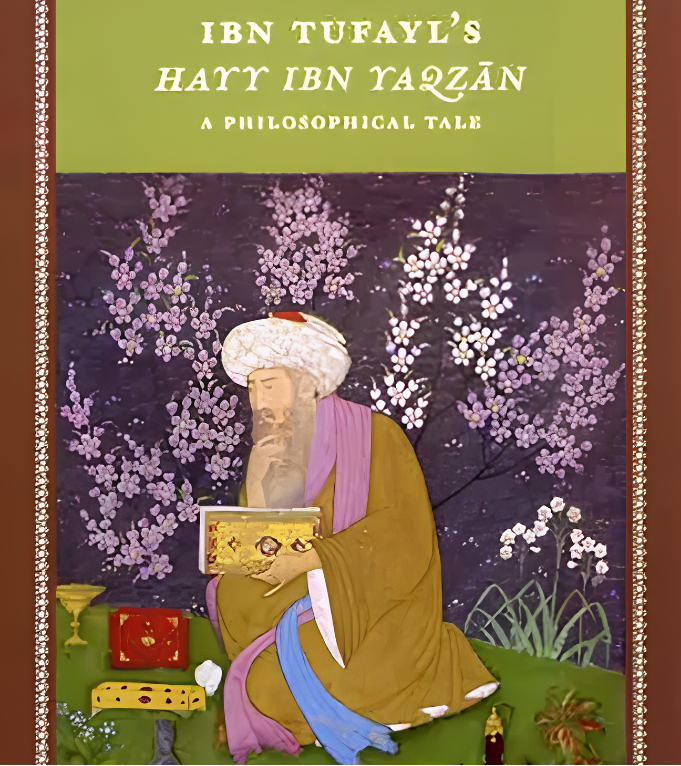
Who is Ibn Tufayl?
His full name is Abū Bakr Muḥammad b. ‘Abd al-Malik b. Muhammad b. Ṭufayl al-Qaysī. He is widely known in the Islamic world as Ibn Tufayl and as Abubacer in the West. It is estimated that he was born at the beginning of the 12th century.
He received his education in Ishbīliya (Sevilla) and Qurṭuba (Córdoba), benefiting from the works of Ibn Bājjah in philosophy. He practiced as a physician and even served the amirs of that era. Ibn Tufayl passed away in 1185 in Marrakesh.
Let’s examine the core themes of Ḥayy b. Yaqẓān after this brief introduction.
This work belongs to Ibn Tufayl, one of the most significant Muslim philosophers in al-Andalus. Ḥayy b. Yaqẓān is the only extant work by Ibn Tufayl.
Ibn Sīnā (Avicenna) authored a work with the same title; however, the distinction is that Ibn Ṭufayl’s Ḥayy represents a human being who interacts with the external world, experiences, and attains knowledge through intellect. The work is also known as Asrār al-Ḥikmat al-Mashrikiyya.
This book posits that a human being can reach the knowledge of Truth (al-Ḥaqq) without waḥy (revelation). The main aim of the author is to express that knowledge reached by reasoning, questioning, and contemplation does not contradict the divine truth revealed (waḥy) through the Prophet.

The Plot of Ḥayy b. Yaqẓān
There are two main characters in the story: Ḥayy, who represents pure reason capable of reaching the knowledge of Truth (al-Ḥaqq), and Absāl, who represents revelation (waḥy) derived from God.
Ibn Ṭufayl presents two alternative accounts regarding the origins of Ḥayy b. Yaqẓān:
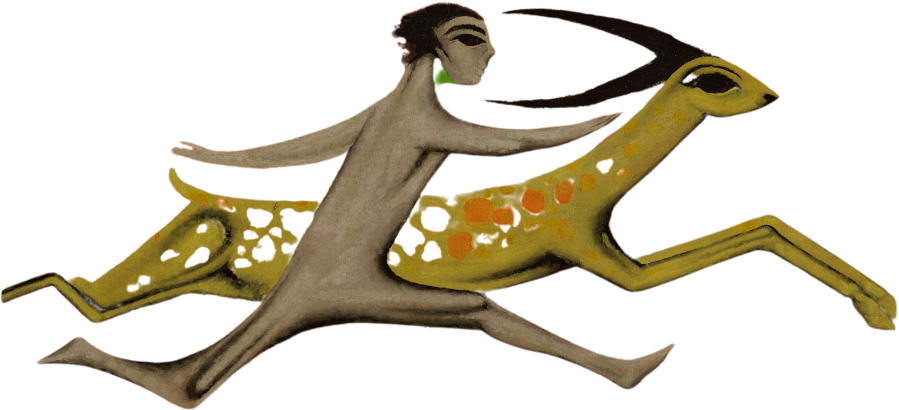
- The First Account: Ḥayy is said to have emerged spontaneously from the soil. Over time, as the earth eroded, “water blisters” formed where he was nurtured. When these blisters eventually cracked, the infant Ḥayy began to cry, attracting a mother gazelle that subsequently raised and fed him.
- The Second Account: Ḥayy is the son of human parents. His mother was the sister of a cruel king on a neighboring island. Because the king did not deem anyone worthy of becoming the husband of his sister, she could not marry anyone. She applied secret ways. She had loved a man named Yaqẓān. After that, she had a boy, but she placed the baby into the water because of her fear of her brother.
The author wanted the readers to choose from these stories about Ḥayy’s beginning according to their own will.
The aim of the work is to demonstrate to the reader the extent to which a human being can intellectually develop - within the heart of an untouched wilderness, without formal education, removed from any sociocultural environment, and relying solely on the experiential and contemplative capacities of innate reason.
Ḥayy interacted with beings on the island during childhood, adolescence, and adulthood. In time, he began to understand the real truth behind the objects by reasoning and contemplation. By these mental activities, he reached the idea of God without any revelation.
Later, Absāl came to the island where Ḥayy lived because the society from which Absāl came had become corrupted. There was an immoral atmosphere there; therefore, he left that society. Furthermore, this society had received knowledge through revelation from the prophet.
In time, Absāl encountered Ḥayy on the island. Ḥayy was very shocked; he had never seen a being like him before. Then Absāl started to notice that Ḥayy had obtained the knowledge of Truth by himself without any instruction. After that, Absāl explained the situation of the society he came from. Ḥayy wanted to guide this society through his own contemplative progress toward reaching God. Hayy then travelled with Absâl to the island where this society lived.
At the end of the story, Ḥayy understood that the society’s members (awām) went astray when he shared his intellectual journey toward Truth with them. The reason for this was that the community was not at the level of this intellectual capacity. That’s why he decided to come back to his island.
The Philosophical Progression of Hayy
- Turning the interaction of a human with nature into empirical knowledge.
- Progressing from empirical knowledge to the theoretical level.
- Experiencing Truth (al-Ḥaqq) within oneself through mystical enlightenment.
This work has been appreciated by people from various cultures. Therefore, it has been translated into different languages by several scholars, such as:
• Moses b. Joshua (translation into Hebrew)
• Léon Gauthier (translation into French)
• Edward Pococke (translation into Latin as Philosophus Autodidactus)
• Babanzade Rashid (translation into Turkish
• Badi’uzzamān Furūzānfar (translation into Persian)
Bibliography
Kutluer, İlhan, Hasan Katipoğlu. “Hayy b. Yakzân”, TDV İslam Ansiklopedisi (İstanbul: TDV Yayınları, 1997), v. 16, p. 551-554.
Ateş, İlyas, (2022) İbn Tufeyl’in Hay bin Yakzan Eserinde Deneyim, Öğrenme ve Eğitim, Ankara
Demirel Mıstak, Fatma, (2023) İslam Felsefesindeki Alegorik Hikâye Geleneğinin Çocuklarla Felsefe (P4C) Uygulamalarında Kullanımı Hayy bin Yakzan Örneği, Kütahya