Al-Andalus was a state that had a significant impact on both Islamic and world history. It can be considered as one of the veins of Islam beating within the West. With both its strengths and weaknesses, it contributed to the development and expansion of Islamic civilisation in many fields. Among these fields, one of the most important is undoubtedly philosophy. Alongside the philosophical ideas transmitted to Europe through translation movements, philosophers in al-Andalus also made major contributions. Ibn Rushd was one of the leading figures among them. Although he served as a bridge in transmitting philosophy, he also provided interpretations that made it more accessible and comprehensible. One of the greatest debates between philosophy and religion has been whether they contradict each other. Even today, discussions such as whether reason and religion (revelation) are in conflict or whether scientific inquiry opposes religious truth remain ongoing. This shows that the issue continues to be a subject of active debate. Hence, do reason and revelation really contradict each other?
Al-Andalus was a state that had a significant impact on both Islamic and world history. It can be considered as one of the veins of Islam beating within the West. With both its strengths and weaknesses, it contributed to the development and expansion of Islamic civilisation in many fields. Among these fields, one of the most important is undoubtedly philosophy. Alongside the philosophical ideas transmitted to Europe through translation movements, philosophers in al-Andalus also made major contributions. Ibn Rushd was one of the leading figures among them. Although he served as a bridge in transmitting philosophy, he also provided interpretations that made it more accessible and comprehensible. One of the greatest debates between philosophy and religion has been whether they contradict each other. Even today, discussions such as whether reason and religion (revelation) are in conflict or whether scientific inquiry opposes religious truth remain ongoing. This shows that the issue continues to be a subject of active debate. Hence, do reason and revelation really contradict each other? In this text, I will attempt to answer this question from Ibn Rushd’s perspective, while also relating it to the present day.
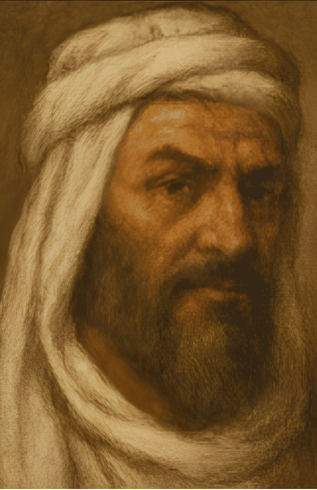
Ibn Rushd was an important thinker who lived in al-Andalus in the 12th century. He was born in Qurṭuba (Córdoba), raised in a family with a strong scholarly tradition, and served in state positions while also engaging in intellectual work. During the period in which he developed his ideas, the Islamic world was experiencing significant turmoil due to debates between philosophy and religion. In particular, Al-Ghazali’s criticisms of philosophy (especially of some Aristotelian views) influenced the perspectives of Islamic scholars and perhaps even discouraged them from engaging in philosophy. However, al-Andalus was not in such a chaotic situation; it still provided a suitable environment for philosophical activity. One of the reasons for this was that many religious and ethnic groups had already been living together and exchanging knowledge. Additionally, the support of certain statesmen played an important role. Within this context, Ibn Rushd attempted to answer some fundamental questions. What made him particularly well-known was his reinterpretation of Aristotle’s works, making them more understandable, since Aristotelian ideas and the Peripatetic philosophers were under serious criticism. His reinterpretations also influenced the West, guiding thinkers such as Thomas Aquinas. In his work Faṣl al-Maqāl, Ibn Rushd focuses on questions such as whether religion (revelation) and philosophy (reason) contradict each other, why philosophy is necessary, and who is qualified to engage in it.
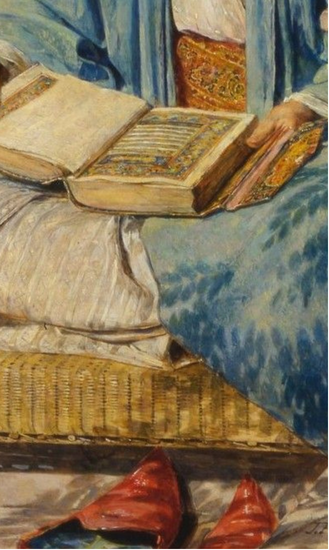
In Faṣl al-Maqāl, Ibn Rushd argues that philosophy is necessary because the Qur’an itself encourages people, through its verses, to think, reflect, and use their reason. In this sense, philosophy does not differ from this purpose. Philosophy also seeks to reach truth by asking questions, using reason, and following rational methods. For Ibn Rushd, truth is singular; it is not multiple. Therefore, both revelation and reason ultimately lead to the same truth. Their methods may differ, but a difference in method does not change the existence of that truth. According to Ibn Rushd, this makes it religiously obligatory for qualified scholars to engage in philosophical reasoning. Returning to the issue of contradiction, Ibn Rushd states that “no genuine demonstrative truth can contradict true revelation; any apparent contradiction arises from a misinterpretation of the text or an error in reasoning.” In other words, truth cannot contradict truth; if such a situation appears, reinterpretation (ta’wīl) becomes necessary. Due to the nature of its language, the Qur’an does not express everything in a completely explicit way; it also contains implicit and metaphorical meanings. According to Ibn Rushd, when a demonstrative (certain) truth reached through reason appears to conflict with the apparent meaning of revelation, this conflict is only superficial. In such cases, the text should be interpreted through ta’wil (allegorical interpretation). However, this method should not be applied by everyone; only those who possess demonstrative knowledge and intellectual competence are qualified to engage in such interpretation. For the general public, the apparent (literal) meanings should be preserved in order to prevent confusion and misunderstanding. Therefore, mistakes or differences in interpretation are possible. Accordingly, a truth reached through correct reasoning should not contradict the truth conveyed through revelation. Ibn Rushd also discusses who should engage in philosophy, since not everyone is capable of this activity, and not all forms of reasoning are sufficient for comparison with revelation. He divides people into three groups: the first group is the folk, who understand truth in its apparent (literal) sense; the second group has a higher capacity for thought and debate; and the final group consists of philosophers who can reach the highest level of knowledge. Thus, those who can attain true knowledge are fewer than expected. The knowledge reached by this minority should be followed by the majority. These individuals also have the responsibility to guide society based on the knowledge they attain. Philosophers, through their knowledge, can interpret verses more deeply, but they should not present these interpretations directly to the public, as ordinary people may misunderstand them, leading to confusion. Instead of conveying their interpretations directly, they should teach and guide. In this sense, prophetic guidance itself can be understood as addressing different levels of human comprehension.
Considering all this, the point Ibn Rushd aims to reach is quite simple: while reason questions why the universe was created, religion already provides an answer. Ultimately, reason will arrive at the same answer given by religion. If both are blessings granted by God, why should they contradict?
In a sense, Ibn Rushd also provides an answer to contemporary debates. The same response can be given to the question of whether science and religion conflict. In fact, rather than conflicting with science, the Qur’an has even functioned as a source of inspiration for scientific reflection. The Qur’an encourages thinking and reflection, which in turn can contribute to the development of scientific inquiry. Despite this, it can be argued that many ongoing debates stem from misunderstandings or oversimplifications rather than genuine contradictions. Verses that insist on thinking and understanding cannot possibly be an obstacle to this; if anything, such an obstacle would itself be the real contradiction. Moreover, reducing this relationship to a simple conflict overlooks the depth of both religion and human reason. Scientific inquiry, when properly understood, does not weaken faith but can deepen one’s awareness of the order and purpose within creation. In this sense, the pursuit of knowledge should not be seen as a threat, but rather as a means of approaching truth more closely. Misinterpretations on either side can create artificial tensions that do not actually exist at the level of truth itself. Therefore, instead of continuing these unproductive debates, a more balanced and thoughtful approach is needed, one that recognizes the limits of human understanding while still valuing both revelation and reason as essential sources of knowledge.
In conclusion, the discussion of the relationship between reason and revelation, which was central to Ibn Rushd’s thought, still maintains its relevance today. From his perspective, the idea that truth is singular and cannot contradict itself provides a strong basis for reconciling philosophy and religion. What appears as a contradiction is, in most cases, the result of limited understanding or incorrect interpretation. Therefore, rather than positioning reason and revelation as opposing forces, it is more meaningful to see them as complementary ways of reaching the same truth. Ibn Rushd’s approach not only reflects the intellectual atmosphere of al-Andalus but also offers a framework that can guide contemporary debates. In this sense, his thought continues to provide a valuable perspective for understanding the harmony between faith and reason in both past and present contexts.
- Bibliography*
Yiğit, Fevzi. “The Nature, Formation of Knowledge and Material Reason in Averroes.” Cumhuriyet Theology Journal 27 (2), (2023): 443–458.
Terkan, Fehrullah. “Ibn Rushd, Fasl al-Maqal and the Theory of Double Truth.” İstanbul Üniversitesi İlahiyat Fakültesi Dergisi, (13) (2006).
Ibn Rushd (Averroes). Faṣl al-Maqāl (On the Harmony of Religion and Philosophy). Translated by George F. Hourani. London: Luzac, 1961.