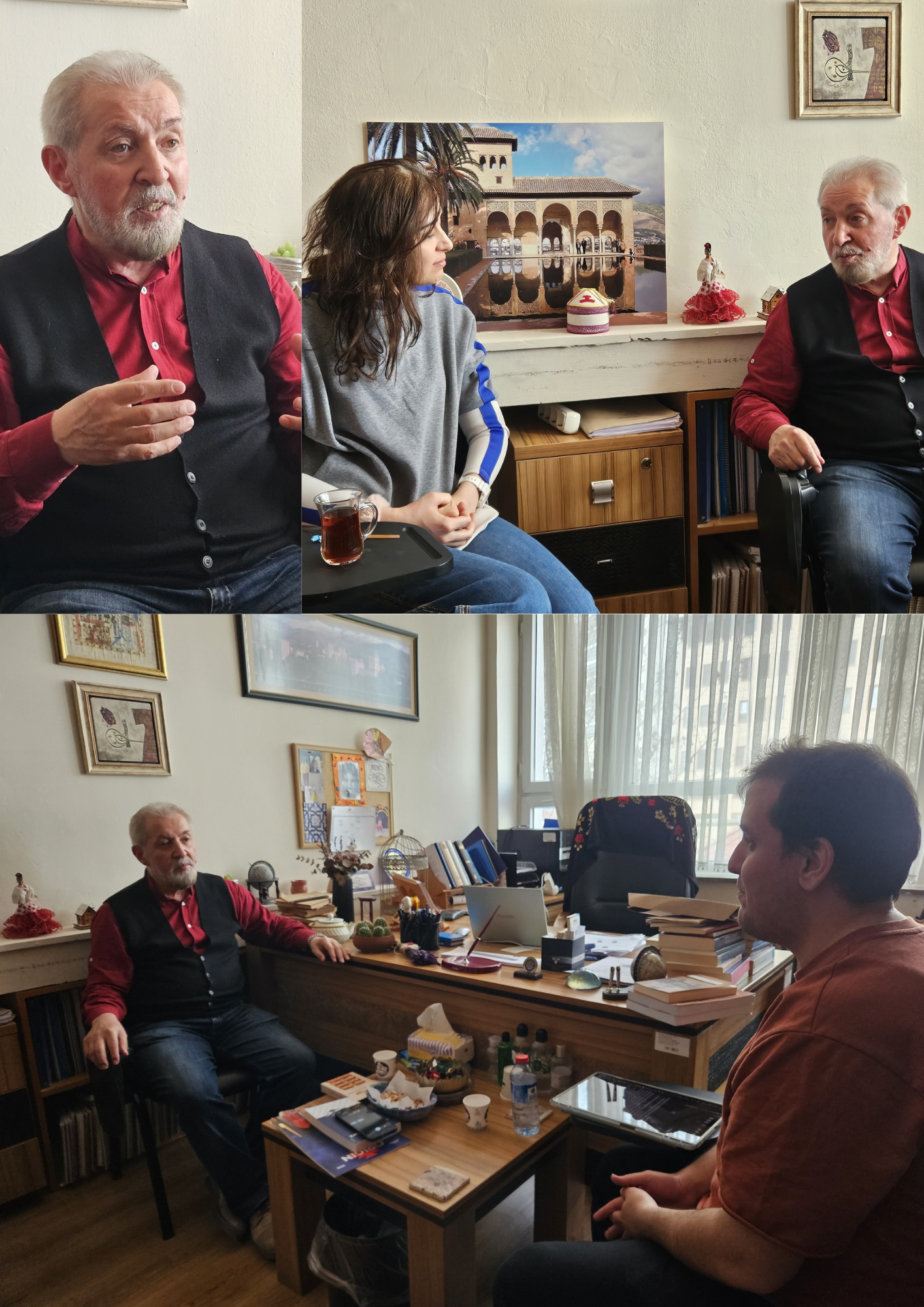
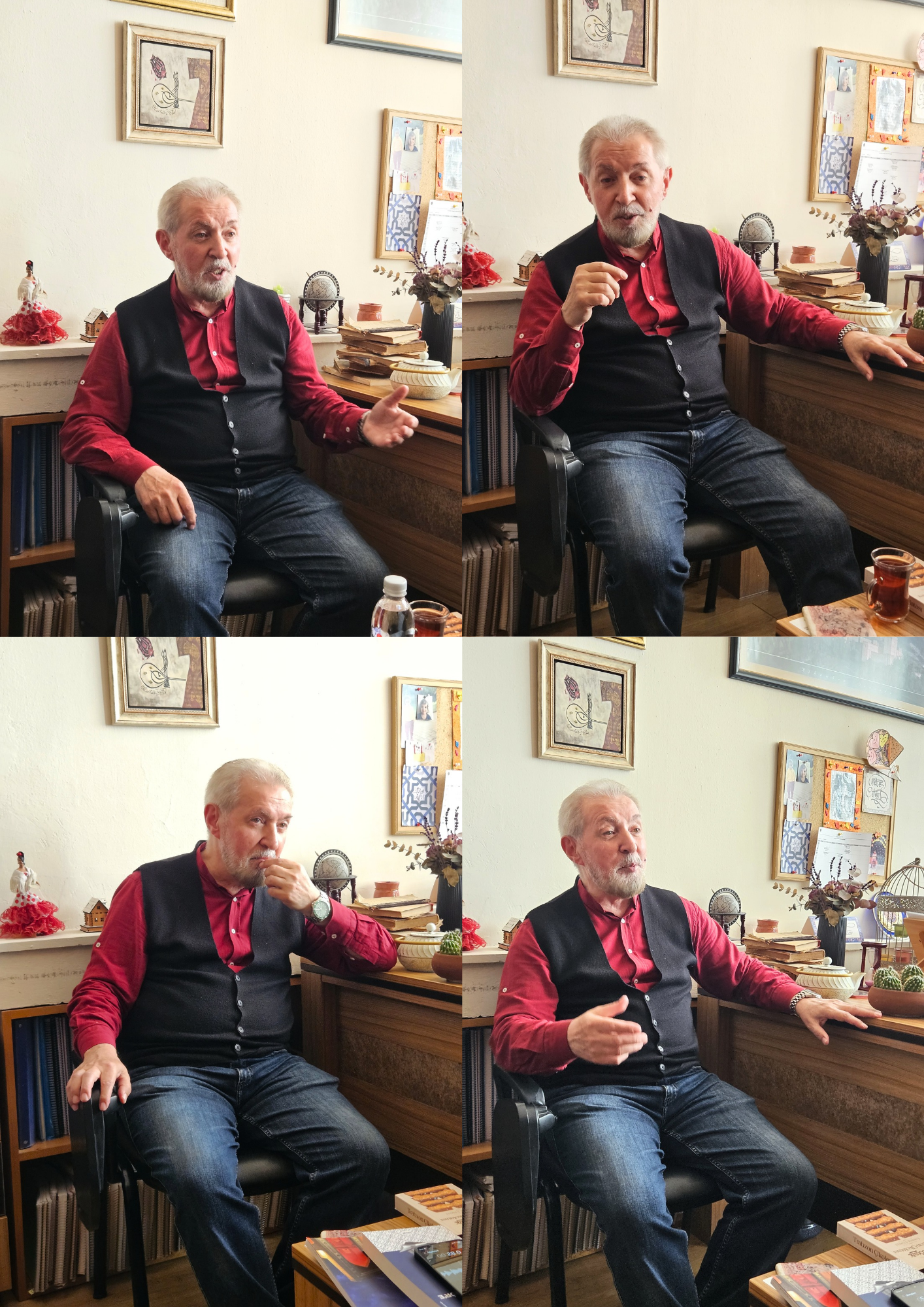
Prof. Dr. Mehmet Özdemir, known for his invaluable studies on the history, civilization, and culture of al-Andalus, is a pioneering figure in his field. In this interview, we had an insightful conversation starting from his journey into theology to the intellectual world of alAndalus and its significance in Islamic history.
Prof. Dr. Mehmet Özdemir, known for his invaluable studies on the history, civilization, and culture of al-Andalus, isa pioneering figure in his field. In this interview, we had an insightful conversation starting from his journey into theology to the intellectual world of al-Andalus and its significance in Islamic history.
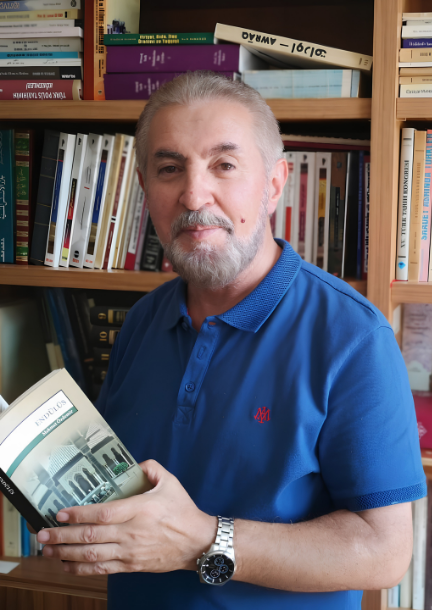
Dear Professor, first of all, thank you for welcoming us and taking the time for this interview. During my research on al-Andalus, I have frequently witnessed the pioneering nature of your work in this field. We are here to benefit from your extensive knowledge. With your permission, Iwould like to start with my first question:
Professor, if we go back to the beginning of your academic journey, how did your decision to choose the Faculty of Divinity unfold, and what was your primary motivation for selecting this field?
Actually, it is quite a long story, but I can summarize it as follows: I began my professional life at the age of 18 as a primary school teacher. I was among the last graduates of the teacher training schools of that era; after my cohort, these schools were converted into teacher high schools. While teaching in an old village room in Çatakbahçe, a village in the spir district of Erzurum, I also began preparing for the University entrance exams.
Despite the challenges of teaching under village conditions, I manage to secure the official decision to build a school in village that previously had one. However, my true ideal was to pursue higher education. Several key factors influenced my move toward the field of Theology. My initial interest was sparked by the motivation of a graduate from the Higher Islamic Institute working in Erzurum, and a preacher who visited the village once a month, captivating us with his eloquence. While dealing with the village’s problems, I studied for the exams using test books I had ordered from Ankara. Although History and Literature were at the top of my preference list, I was admitted to the Faculty of Divinity, my third choice, with a high score.
The background of this choice was shaped not only by those encounters but also by a heritage stemming from my family and the environment in which I was raised. I belong to a humble and conservative Anatolian family. My late father was a dignified man, known for his piety and high work ethic; he was essentially the “mentor”of the village. His religiosity was rooted in tradition and sincerity rather than technical knowledge. In fact, after entering the Faculty of Divinity, I realized that some of the prayers Ihad learned from my father as a child were technically “incorrect”. Yet, at that age, I also understood this: what mattered was not the linguistic accuracy of the words, but the ikhlas(sincerity) and devotion with which those prayers were offered.
Furthermore, my uncle used to embrace me during my primary school years, saying,“My son will be a mufti”. This was perhaps a foresight that was unconsciously etched into my mind. Even though I chose a boarding teacher training school over an Imam Hatip high school in those years, my conservative environment, combined with the religious sensitivity awakened by the figures Iencountered, eventually evolved my path toward this field.
Thank you very much, Professor. You mentioned that History and Literature were at the top of your list. Based on this, it is clear that your curiosity for history goes back a long way. So, how did you turn this passion for history into a professional career during your education at the Faculty of Divinity?Furthermore, what were the main factors that drew you specifically to the History of al-Andalus, a field that is as ancient as it is fascinating?
Actually, both my orientation toward Islamic History and specialization in the History of alAndalus occurred through events beyond my will; I could say it was entirely directed by the conditions of time.
Initially, my goal from the very first day was to pursue academic studies in the field of Tafsir. However, at the time of graduation, no research assistant positions were opened in branches like tafsir, kalam, or religious education. Since we graduated from a five- year program, we were considered to have completed a master’s degree automatically. The only available option was aprogram in Islamic History. I had to make a critical decision at that point. In fact, I had been appointed as a teacher to the Erenköy Vocational High School for Girls, but due to the extraordinary conditions of that period and bureaucratic barriers they brought, this appointment never materialized. Subsequently I took the exams to become a mufti. Yet, by a twist of fate, the oral examination for becoming mufti and the entrance exam for the Islamic history master’s program coincided on the same day and at the same hour. I had to choose between aguaranteed path of civil service or an academic path filled with uncertainties, but driven by idealism. I exercised my choice in favor of academia.
I had even earned the right to attend the Diyanet Haseki Education Center, but I could not go because of civil service requirements. When I applied to the Ankara Mufti’s Office for a position as an imam, I encountered a strange bureaucratic barrier of that period: “Divinity graduates cannot be imams; only Imam Hatip graduates can.” In the end, I was left with a path in Islamic history that offered no financial certainty but was filled with determination.
Even though my academic adventure began this way, al-Andalus was still not on my hand. During my time as a research assistant, when I reached the thesis stage, my esteemed Prof.Mustafa Fayda - may Allah grant him a long life and perfect health- recommended that studyal-Andalus. Mentally, I was focused on the Sira period, but with my supervisor’s encouragement, I spent nine months doing extensive reading on al-Andalus. As I read, I discover a magnificent world I had never known. Ultimately, I prepared my PhD thesis on the “Muwalladun Movements”, which focused on the native people of Spain who converted to Islam. Thus began my passionate journey into al-Andalus, which continues to present.
Professor, your nine-month journey of preparation and discovery is truly fascinating. What were the first sources you consulted during this period of extensive reading? Did you turn directly to Arabic primary sources, or were there works in Spanish or other languages that helped you open the doors to the world of al-Andalus ?
I didn’t know Spanish at that time, so I began reading directly in Arabic sources. First, It meticulously examined Abdulaziz Salim’s book, Tārīkh al-Muslimīn wa Āthāruhum fî al-Andalus, along with the extensive studies of Muhammad Abdullah Enan.
The support of my supervisor, Prof. Dr. Mustafa Fayda, was of vital importance during in this process. In addition to the books and articles he brought back from his visits to Egypt and Saudi Arabia, a very special opportunity arose. Thanks to the Saudi Arabia Ambassador to Madrid, who was a maternal relative of my supervisor, a collection of nearly ten volumes-comprisingboth current and foundational works available in Spain-was delivered to us. After carefully reviewing these sources, my thesis topic started to take shape in my mind.
To deepen my research further, I went to Egypt at the beginning of 1985. There, I not only conducted literature research but also had the opportunity to meet the living legends of the era. For example, I met and consulted with Mahmud Ali Makkî, one of the most prominent names that comes to mind regarding Andalusian studies. Following those meetings and my research, al-Andalus transformed into an irreversible, lifelong academic journey for me.
Professor, it is clear from your account that external circumstances and “divine coincidence”have played a crucial role in shaping your academic journey. Looking back at this entireprocess-both in your academic career and personal life-is there a specific moment or even of which you can say,“This was the real turning point that changed my life completely”? What would you consider the “keystone” of your world in this journey ?
Although it might seem from the outside that I have moved in astraight line, I have actually experienced very sharp junctions that completely changed the course of my life. The first major turning point occurred at the age of 18, while I was a primary school teacher. At that time, I was engaged, and our plan was to move to Austria. A different life with much better economic conditions was waiting for me. However, with a radical decision, Igave up both that future plan and that life; I dedicated myself entirely to the university entrance exams and an academic future. Ido not think there could be a more significant rupture the than.
The second major turning point coincided with the day that the master’s entrance exam and the oral examination for becoming mufti were scheduled at the exact same hour. This was the most difficult decision for me, choosing between the “Diyanet Community” and “Academia”. I can never forget the tension I felt during that period. When the exam schedules conflicted, I went to our philosophy professor, Prof. Dr. Hüseyin Aydın, who had a Diyanet background, to ask if there was any possible solution. Professor Münir Koçtaş was also in the room. When I explained the situation, Prof.Koçtaş scolded me in a stern tone, saying: “This is unacceptable; choose one of them!”. At that moment, I did not like the scolding of Prof. Münir; the result was what he said.
In the end, I made that decision myself, and chose to go the faculty for the exam. If I had gone to the mufti exam that day, I would probably sitting before you today as a retired provincial mufti. By choosing academia, I completely redrew the entire direction of my life.
Professor, if you had the chance to bring someone from history of al-Andalus back to life and have a conversation with them today, who would that person be? What would be your reason for choosing them?
Actually, it is difficult to choose just one name; I would want to bring back two, or even three names together. Firstly, I would definitely choose Ibn Rushd. Even today, he could be pioneering figure in the field of fiqh (jurisprudence). Alongside him, I would add the architect of the maqasid idea, al-Shatibi. If I had the right to a third name, I would certainly choose Ibn Hazm. He was incredibly brilliant, but beyond that, he was a provocative figure. He brought intellectual dynamism to in every environment he entered. We are in great need of his sharp criticism, which keeps both society and ideas alive.
I see, Professor. Would you consider adding any other prominent names to this list from among the historians or thinker of that era? For instance, someone like Ibn Hayyan or Ibn Tufeyl?
Among historians, I would absolutely want Ibn Hayyan. The presence of such a historian could fundamentally change the way we understand the past. Ibn Tufayl is also a great name, of course; however, the philosophical tradition he presents is already embodied to some extent in the person of Ibn Rushd. Therefore, choosing Ibn Rushd would be sufficient, as he carries that same depth with him.
We whould now like to move on to a topic regarding the social fabric of al-Andalus, a subject that is still highly relevant today. It is well known that Muslims, Christians and Jews lived together inal-Andalus. First of all, how do you interpret this social landscape? Was al-Andalus truly as ideal and peaceful a society as it is often depicted in the literature? What were the fundamental dynamics that distinguished them from modern societies and made this experience of “living together”possible?
In fact, the experience in al-Andalus was part of a broader administrative system applied across the Islamic world; it was not unique to al-Andalus alone. However, because al-Andalus served as a contact point with the West and a conduit for transferring Islamic knowledge to Europe, the region became the center of the “convivencia” (living together) debate.
Today, within the scope of the European Union project, as efforts are made to find ways for different nations to coexist, historical references are being sought. However, the experience of coexistence in Western history was often limited to the lifespan of individual rulers and could be broken at any time by arbitrary decisions. In Islamic governance, the situation was quite different. The status known as“Dhimmi Law” was permanent; a caliph or emir could not change at their own whim. This status could only be jeopardized if the non-Muslim subjects violated the initial agreements. Therefore, diverse communities such as Jews, Christians, Zoroastarians, and Yazidsi were able to preserve for centuries across Islamic lands.
When we look at Western history, we see that assimilation was the dominant force. There is almost no trace left of the ancient religions following the fivehundered-year Spanish rule in South America. This is because, when Christianity unified with the state, life was often no granted to “the other” in the name of preserving the purity of the final religion. This is the basic logic behind exile and the creation of isolation districts known as ghettos. Today, we do not find a rooted Muslim population in Sicily or mainland Spain because they were either Christianized or eliminated.
Returning to al-Andalus experience, it was a “frontier country” where cultural interaction reached its peak. While under Muslim rule, many Christians imitated to lifestyle, and clothing of Islamic civilization; yet, when the the roles reversed and Muslims became the minority, they, in turn, came under the influence of Christian culture. To sum up, peace in al-Andalus was not based on the permission of individuals, but on the permanent status and the foundation of trust provided by Islamic law.
The invaluable information you’ve shared clearly explains the legal foundation of this peace. However, with your permission, I would like to return to the striking part of my question. In your view, was al-Andalus truly as flawless and peaceful society as it is portrayed in popular narratives? Or does depiction contain a degree of “Andalusian Romanticism”?
Of course, no society is a structure inhabited by angels or devoid of problems; even within a family, arguments can arise from time to time. The important thing here is whether people cab exercise their basic rights and freedoms when looking at society as a whole. When evaluated by the standards of that era, we see that fundamental elements such as the safety of life, property rights and freedom of religion were granted by the state. According to fiqh, unjustly taking the life of a non-Muslim is strictly forbidden in Islamic law, and such actions carried legal consequences in practice. Specifically in alAndalus, the fact that conquest were largely achieved through peace treaties and agreements pave the way for preserving the ownership and religious rights of the native people.
We must pay attention to a very important point: theoretical discussions in fiqh books and historical reality do not always overlap exactly. For instance, while some fiqh works contain theoretical rulings against building churches in the cities founded by Muslims, history shows a much more flexible reality. Excavations in Madrid, a city established by Muslims, have proven the existence of a church and even asynagogue alongside the Jewish community. Therefore, a researcher who wishes to understand the Islamic approach to rights should look beyond theoretical drafts, and consult direct historical sources and lived experiences.
Naturally, there were frictions between communities in al-Andalus, but the state acted as an“organizer”; it did not permit these tensions to escalate into major conflicts and maintained public safety. Although a large part of the population embraced Islam over time, they maintined relationships with their former neighbours and Christians relatives, continued living in the same neighbourhoods, and sustained their humanitarian and commercial ties. In conclusion, while there were frictions in the details, we can say that the an experience of coexistence and climate of trust prevailed in the general picture.
Al-Andalus was a ‘frontier region,’ a geography where religious sensitivities were exceptionally high. In your research, you mention that the people of al-Andalus placed great importance on religious life—such as performing prayers incongregation—and that officials were even appointed to oversee it. However, we also encounter practices that seem quite radical, such as the burning of al-Ghazali’s works. Based on this, is it possible to characterize the Andalusian understanding of Islam as ‘radical’ or ‘rigid’? What were the fundamental motives behind such severe attitudes?
In fact, this attitude is an attempt to form ageneral judgment based on specific examples; unfortunately, it is often preferred by certain ideological circles in the West. Especially following Samuel Huntington’s ‘Clash of Civilizations’ thesis, there has been a concerted effort to establish that Western culture is rooted solely in Judeo-Christianfundamentals and that Islam has no place in this structure. Accordingly, the thesis is advanced that past experiences of peaceful coexistence are merely a narrative. With the support of some Zionist and Orientalist writers, a history is being reconstructed based on the perception that Muslims historically oppressed non-Muslims.
Therefore, instead of focusing on selective examples, we need to look at the bigger picture. There were certainly radical and rigid elements in al-Andalus; however, alongside them, there was an entirely present moderate and tolerant population. Defining the general religious profile of a society based on a few harsh examples leads us to the wrong conclusions. It should not be forgotten that if we can speak of a great civilization in al-Andalus, the architect of this civilization was not the radical strain, but the ‘moderate strain.’
We can identify two fundamental movements in the intellectual world of al-Andalus. The first is the ‘Ahl al-Taqlid’ (followers of tradition) strain, which was closed to new ideas and sought to preserve the heritage of past masters through imitation. The second is the ‘Ahl al-Tahqiq’(seekers of truth) strain—the moderate and investigative path that built the civilization. Events such as the burning of al-Ghazali’s books were exceptional incidents, mostly limited to the Almoravid (Murabitun) period when the struggle for existence had become particularly severe. Such events were very few during the eight-century-long history of al-Andalus. To sum up; both strains existed, but the civilization-building spirit that developed the region and carried its legacy to the present was the product of that moderate climate.
We have discussed the rich cultural heritage and the long-standing Islamic rule in al-Andalus. However, at a certain point, this dominance began to decline, and with the process known as the ‘Reconquista’, Christian kingdoms came to rule the region. What we wonder is this: After living in apeaceful and pluralistic environment for centuries, what lay behind the exceptionally harsh attitude of the Christian kingdoms toward the Muslims? Furthermore, how would you interpret the 1609 exile decision and the tragedy of the Moriscos in this historical context?
First of all, we must clarify a concept, as this is one of the points I am most sensitive about. We use the term ‘conquest’ (fath) only for the movements of Muslims, as it has a specific religious foundation. For the movements of the Christians, it is more accurate to use their own terminology,‘Reconquista,’ or terms such as ‘invasion’ and ‘occupation.
The root of the Christian attitude toward Muslims lies in the fact that they viewed Muslims as invaders of their homeland from the very beginning. Until the eleventh century, this idea remained merely an ‘ideal’; however, the fall of the Umayyad State of al-Andalus and the subsequent fragmentation (the Mulūkal-Tawā’if period) transformed this ideal into an action plan. Witnessing the internal conflicts among Muslims, the Christians began to ask: ‘Can we truly take these lands back?’
The real turning point in this process was the occupation of Tulaytulah (Toledo) in 1085. Following this victory, Christian kingdoms began to openly tell Muslims to ‘leave.’ To them, even though Muslims had been there for three centuries, they were merely ‘provisional guests.’ The papacy and Christian chronicles of the time advanced this thesis, grounding the idea that not only al-Andalus but even North Africa was fundamentally a Christian land.
When the Muslims sought support from North African powers like the Almoravids (Murabitun) and the Almohads (Muwahhidun) to counter this pressure, the intensity and scope of the conflict widened. Battles were no longer confined to the borders; they transformed into a ‘war culture’ felt across all levels of society. The fundamental reason for the Christians ‘increasing severity was that they viewed al-Andalusas their rightful property, yet faced an incredible Muslim resistance that defended the land until the very last moment. This mutual resistance, combined with the ideological support of the papacy, turned the process into a significantly bloody and harsh struggle.
What can you tell us about the Moriscos, who represent the most sorrowful chapter of alAndalus history that emerged at the end of these processes? What kind of identity challenges did the Moriscos endure on the path to the exile decision in 1609, and was this elimination movement merely a political decision or the consequence of a deep-seated societal hostility?
Moriscos refers to the segment of Andalusian Muslims living under Christian rule who were accepted as Christian only on paper. We must divide this process into two distinct periods: Until 1502, the community we call ‘Mudejar’ (Müdeccen) could maintain their existence with certain rights. However, starting in 1502—first in Castile, then Aragon, and finally across all of Spain by 1524—this status was completely revoked. The state presented Muslims with a single ultimatum: Convert to Christianity or leave the country.
The Christian kingdoms followed a systematic policy of ‘De-Islamization,’ pioneered by figures such as Ramon Llull. We can examine this policy across three fundamental axes:
1.Spatial and Social Purification: When a city was captured, the first order of business was to immediately convert places of worship into churches and expel Muslims from the city centers. To impose a Christian identity upon the city, the Muslim presence was isolated, and the conversion of Christians to Islam was strictly prohibited under the harshest penalties, such as confiscation of property or death.
2.Severing of Cultural and Religious Ties: Muslims’ access to religious sources was cut off, and the circulation of texts was blocked. By the fourteenth century, the people’s connection to Islam had dwindled to a mere ‘sense of belonging.’ Furthermore,‘coercive sermons’ were instituted to force conversions; a priest or monk would enter a mosque, and the entire Muslim congregation was compelled to listen.
3.Destruction of Ownership and Belonging: A narrative was established stating, this land was ours all along,’ aimed at uprooting Muslims from their homeland. Here, the ‘Hijrah’ (migration) fatwas issued by Muslim jurists also accelerated the process. These fatwas, suggesting that Islam could only be practiced under Islamic rule, led to the rapid emigration of the ulema and the wealthy, leaving the poor leaderless and defenseless. Ultimately, a heavy policy of assimilation was applied to those who remained. Any contact the Moriscos had with the Ottoman Empire or North African Muslim states was viewed by the Spanish Crown as an ‘internal threat’ or ‘fifth column’ activity. Following the expulsion of the Jews in 1492, the liquidation of the Muslim presence became state policy to achieve total religious unification. Once it was clear that assimilation had failed, the infamous exile decision was made, based on the idea of completely purging the land of its original inhabitants. The similarity between the policies applied in Gaza today and this historical process demonstrates how deeply rooted the strategy of ‘dehumanizing’ or ‘depopulating’ a land truly is.
While discussing the heavy pressure of assimilation on the Moriscos, it is impossible not to mention the Inquisition. What exactly was the role of this institution in the process of eradicating the Muslim presence in al-Andalus?Was the Inquisition merely a court, or was it acontrol mechanism that infiltrated every cell of both social and private life?
The underlying logic was not to execute the condemned as quickly as possible, but to transform the torture and execution into a ‘cautionary tale’ for society. This mechanism of oppression was not limited to Jews and Muslims; it was used with equal violence against Protestants, who were labelled as ‘heretics’ by the Catholic world. Ultimately, the Inquisition, as an official state institution, transformed into an intimidation mechanism that monitored every cell of society.
The term Inquisition literally means ‘questioning’ or ‘investigation.’ The fundamental function of this institution was to identify and liquidate those who deviated from the ‘Orthodox’ mainstream accepted by the Catholic Church, or those who appeared to conform while secretly maintaining aclandestine faith.
These courts were initially established to target Jewish converts (conversos). The answer to the question,‘Have they truly become Christian, or are they deceiving us?’ was sought by infiltrating the deepest layers of privacy. From dietary habits to ritual practices, everything was monitored through neighbours, and the Inquisition was activated at the slightest suspicion. Later, the same system was applied to the Moriscos (Muslims who were forcibly baptized). A sophisticated ‘whistleblowing network’ was established by strategically placing Christian families next to Muslim households.
The methods of torture and execution employed by the Inquisition were not merely punishments; they were the products of a narcissistic psychology and a spectacle designed to instil terror in the community. In particular, the mass cremation ceremonies known as ‘auto-da-fé’ (act of faith)—organized with the participation of the King, the court, and the entire public—represented the zenith of this deterrence.
There is a striking observation regarding the intellectual and cultural heritage of al-Andalus: It is often said that the two greatest catastrophes to derail the scientific progress of humanity were the fall of Baghdad and the destruction ofal-Andalus. The annihilation of massive libraries, the burning of books in public squares, and people hiding their volumes behind walls in the hope that they might be read again one day are among the most sorrowful scenes in history. In your view, to what extent did the systematic destruction of this immense scholarly heritage truly alter the course of human history?
Historical judgments can sometimes be prone to exaggeration; therefore, we should analyze this issue with cold-blooded objectivity. Attributing the extermination of books solely to the Christian world would be an incomplete approach. Unfortunately, our own history contains similar painful examples. For instance, the renowned 400,000-volume library established byal-Hakam II was filtered by a commission for political reasons after his death; consequently, many works on philosophy, logic, and astrology were destroyed by Muslims themselves. The burning of al-Ghazali’s books during the Almoravid period or the purging of the school of Ibn Masarra in the 10th century are further examples of this internal resistance.
When we examine the attitude of the Christian kingdoms, we see aspecific approach: When they seized Muslim libraries, they chose to preserve works on medicine, mathematics, chemistry, and astrology because they found them ‘useful.’ They even translated these into Latin and utilized them for their own scientific advancement. However, they were far more destructive toward religious texts. When the Crusaders realized they could not easily convert Muslims to their own faith, they developed a new method: Disproving Islam using its own sources. To this end, the Qur’ān and Hadith collections were translated—not out of scholarly curiosity, but to write refutations and initiate an ‘intellectual transformation.’ While some religious books were preserved for this purpose, the vast majority were burned in public squares as symbols of an ‘enemy religion.’
Today, the El Escorial Library near Madrid still houses a rich collection of Arabic manuscripts. At one point, there were over 20,000 works, but most were lost in an accidental fire. This fire should not be viewed asan act of conscious destruction.
In conclusion, while the scientific heritage of al-Andalus was systematically purged, it would be inaccurate to claim that everything was destroyed. Western civilization fed itself from this knowledge. However, it would also be unfair to suggest that the West reached its current level solely because of this heritage. They built today’s technological civilization by adding their own research, the printing press, and new technologies onto that foundation, while also struggling through their own dark periods, the Inquisition, and the guillotine. This is how civilizations develop—cumulatively.
Throughout your academic career, you have reconstructed every era and every corner of al Andalus in your mind. Now, we would like to ask aquestion out of personal curiosity: If you had the chance to travel through time and personally witness a single moment or a specific event from the history of al-Andalus, which one would it be?What is that key moment where you find yourself saying,‘I wish I could have been there on that day to breathe in that atmosphere’?
Which moment would I want to witness? It is a difficult question, but I believe I would choose tobe there during the fall of Tulaytulah (Toledo). The rupture that occurred in 1085 was adefinitive psychological threshold for the Muslims of al-Andalus. Until that day, while there wasa conceptual possibility that Christians might one day reclaim these lands, no one believed it would actually manifest in practice. However, the moment the city fell—as historians put it—theground shook in al-Andalus, and a terrifying sense of doom began to take hold.
What affects me most are the famous couplets by a poet of that period who articulated this despair. He cried out;
‘O Andalusians!
Prepare your belongings now,
Staying here is nothing but a grave mistake.
He employed a striking metaphor: Normally, a caftan starts to wear out from its edges, but the caftan of al-Andalus has begun to tear right from the middle.
Tulaytulah was at the very heart of al-Andalus, acting as its torso. Once the body was broken, the limbs had nothing left to hold onto.
To experience such heavy psychology would, of course, be incredibly difficult, but I would want to witness it to see that historical lesson in situ. That moment whispers a timeless truth to us: If you cannot manage to consult one another and unite upon a common ground in time, you will have no choice but to weep and flee when catastrophe strikes. The fall of Tulaytulah was not merely the loss of a city for al-Andalus; it was the bankruptcy of the collective will to ‘stay together’.
Professor, at the beginning of our conversation, you emphasized that al-Andalus was not merely a’ beginning’ but one of the most magnificent eras in Spanish history. For our final question, we would like to ask about the contemporary reflections of this influence: Today, if we were to completely set aside the heritage of al-Andalus, would it even be possible to speak of Spanish culture, architecture, or even the Spanish language? In your view, how incomplete would the ‘Spanish project’ be without the presence of al-Andalus?
Spain is unthinkable without al-Andalus. To understand this profound connection, one must look to the nineteenth century—the era when al-Andalus was ‘re-discovered’ by the West. The key figure in this discovery was Washington Irving, a diplomat at the American Legation
Irving stayed at the Alhambra Palace for approximately three months. During his stay, he did not merely study the stones of the palace; he gathered the collective memory of the surrounding people, bringing together parables, ancestral stories, and legends regarding the Muslims. Following this, he wrote his famous work, The Tales of the Alhambra. Through this book, Andalusian civilization became a focal point of fascination in the West. When Western travellers crossed the Pyrenees and entered Spain, they could not hide their astonishment. While the rest of Europe presented a ‘monotone’ architectural and social structure, they felt they had stepped into an entirely different world the moment they arrived in Spain. That difference is the deep trace of al-Andalus. It was even said that ‘Africa begins in Spain’; ‘Africa’ here representing the unique climate of Islamic civilization.
The influence of al-Andalus is not etched only into stone; it is in every cell of life. The magnificent grace of its architecture was injected into Spanish aesthetics by Muslim master builders who constructed palaces for Christian kings. Today, the incredible sensation felt by aresearcher entering the Alcázar of Seville (al-Qasr) is, in fact, the undeniable presence of Muslim palatial life and refinement asserting itself.
When we look at the language, thousands of Arabic-derived words remain alive in Spanish today. In social life, the warm nature of Mediterranean people, the tradition of the evening stroll(paséo), and even styles of dress were nourished by al-Andalus for centuries. Indeed, as the historian Ibn Hayyan notes, there were Christian kings who—were it not for the crowns on theirheads—could easily have been mistaken for Muslim emirs.
This influence is not limited to aesthetics; we are talking about a technical heritage ranging from irrigation laws to medical literature. In my research on plague treatises, I observed that precautions suggested by Muslim physicians were translated directly into Spanish and Latin, becoming an integral part of European medicine. To sum up: If you extract al-Andalus from Spain, neither the modern Spanish identity nor that admirable civilizational depth would remain.
It is possible to speak of a ‘denial’ that has persisted for centuries in Spain—a tendency to ignore or refuse to accept the land’s Islamic past. However, today, the tide seems to be turning. What are your thoughts on modern Spanish society and the state? Can we say that they are finally setting aside this deep-rooted rejection and beginning to make peace with their true history? Is the legacy of al-Andalus viewed today as a ‘burden ‘or as a ‘wealth’ for the Spanish identity?
It is more accurate to interpret this situation through the lens of the two main currents in contemporary Spanish society and politics. For the left-wing, liberal, and socialist sectors, reconciling with and accepting Andalusian heritage as a natural component of Spanish identity isa much smoother process. These groups even advocate transferring the management of structures such as the Great Mosque of Córdoba from the Church to the local public, while fighting to preserve its original name,‘Mezquita’.
Conversely, the situation is more complex for the right-wing and conservative sectors. For them, al-Andalus is a ‘yes’ when viewed as a magnificent heritage that generates revenue and attracts tourists; however, it remains a ‘no’ when it comes to cultural and religious belonging. Within these circles, there is still an exaggerated security concern regarding the notion that ‘Muslims want to take al-Andalus back.’ As a consequence of this anxiety, even today, when you enter the Mosque of Córdoba, you are not permitted to even open your hands for prayer; you remain under strict surveillance. The ongoing debates over whether the site should be called ‘MezquitaCatedral’ or simply ‘Catedral’ are, in fact, reflections of Spain’s painful process of reconciliation with its own past.
In summary, Spain is a stage for the struggle between two different perspectives: One side embraces this heritage, while the other remains on guard, driven by a vestigial ‘Reconquista ‘psychology. Al-Andalus continues to be the grandest mirror through which the Spanish soul debates and ultimately defines itself.
We thank you for sharing your matchless perspective on the profound depth of al-Andalusand for dedicating your valuable time to us. Finally, what would you recommend, as a scholar and a historian, to the students of English Divinity who will be conducting civilization studies on an international level? With what kind of intellectual equipment should they set out to carry this great heritage into the future?
My dear students, first and foremost, you must master your language. However, do not forget this: The greatest disadvantage of the English Divinity program is the neglect of core field courses during the language-learning process. If you follow fundamental disciplines like history or tafsir only through simplified English texts, you will fail to grasp the deep-rooted mission of Ankara Divinity and graduate with only a middle-school level of knowledge. You must fill this void in your major field courses.
If you aim for an academic future, you must act with a clear plan and program from this moment on. Language alone is not enough; you must begin learning the methodology of your chosen field—be it kalam, tafsir, hadith, or history. Establish contact with your professors, request additional readings, and master the concepts and fundamental problems early on. Our biggest handicap is the assumption that we become historians the moment we complete the history curriculum; however, that process is far more arduous. To expedite this journey, decide on your path by your first or second year and ‘frequent the doors’ of your senior professors. No professor at Ankara Divinity will ever turn away someone who comes to them seeking knowledge; benefit from their experience.
Most importantly, being a scholar of Divinity is not just a profession; it is a mission. You are the representatives of this mission within society. The reason for the existence of the English Divinity program is to convey the immense accumulation of Ankara Divinity to the world. For this, both your language skills and your field knowledge must possess ‘steely’ strength. There is much more to be said, of course, but I suppose this is enough to express my intent.