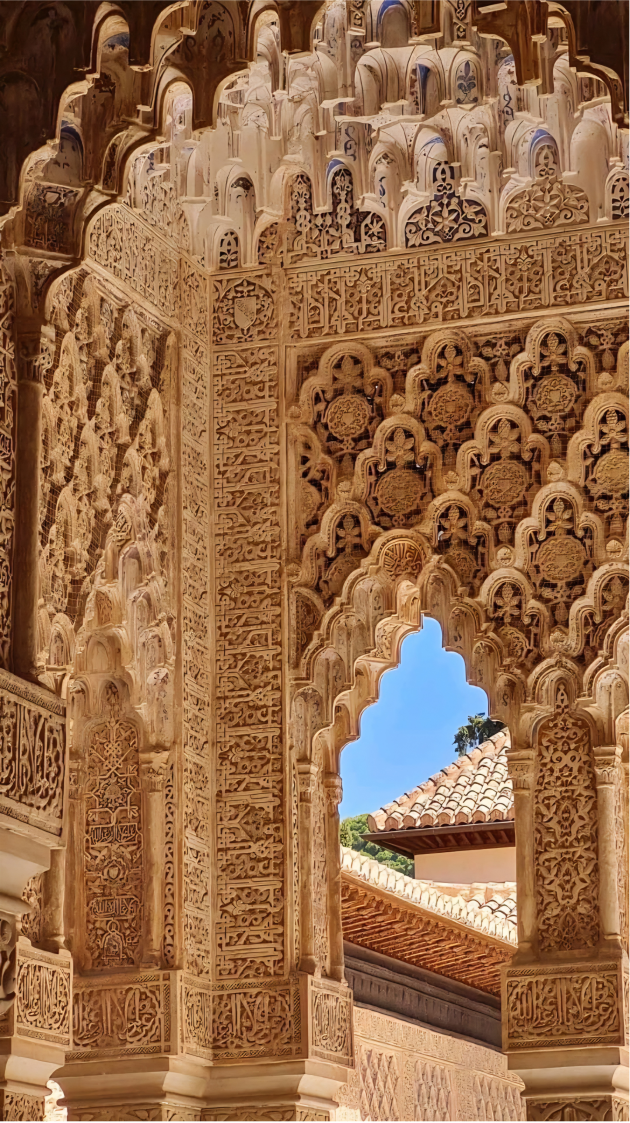
“The heroes of Islamic art are buildings. ” This sentence is significant because it expresses the central contribution of architecture to the Islamic tradition. Throughout history, many civilizations have sought to leave behind monumental works, and those that have survived to the present day offer valuable insight into their cultures. This feature is frequently encountered in Islamic architecture, where the integration of inscriptions into buildings became one of its most distinctive characteristics.
“The heroes of Islamic art are buildings.”
This sentence is significant because it expresses the central contribution of architectureto the Islamic tradition. Throughout history, many civilizations have sought to leave behind monumental works, and those that have survived to the present day offer valuable insight into their cultures. This feature is frequently encountered in Islamic architecture, where the integration of inscriptions into buildings became one of its most distinctive characteristics. In Islamic civilization, the use of Qur’anic verses adds both an artistic quality to the structure and reflects the fundamental beliefs of Islam in a concise and powerful manner.
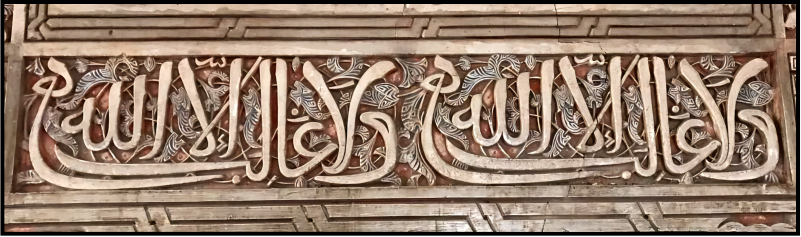
Another important point to note is that the verses selected for architecture are generally short, eloquent, and carry clear messages that reflect the essence of the Qur’an. In fact, some of these verses not only convey a message but also become enduring symbols of the civilization that produced them. In the history of Islam, the phrase “Lā Ghālib illā Allāh,” inspired by Sūrah Yūsuf (12:21), stands out as a prime example of this symbolic role. This expression was inscribed throughout the Alhambra Palace, the distinguished architectural masterpiece of the Nasrid Dynasty in al-Andalus, conveying a timeless message to humanity: “There is no victor except Allah.”
Derived from the Arabic verb ghalaba (“to overcome” or “to prevail”), the word ghālib initially conveys the meaning of “one who prevails, overcomes, or is victorious.” From a theological perspective, human beings receive such qualities and attributes as a reflection of divine favor. However, because human beings are prone to forgetfulness (nisyān), they can easily lose sight of the source of these qualities and potentially fall into disobedience. For this reason, the inscription of this phrase in stone, displayed prominently for centuries, serves as a vital reminder to humanity that the ultimate and true Victor is Allah.
A significant narration exists regarding the inscription of the phrase “Lā Ghālib illā Allāh” across the walls of the Alhambra Palace, where it appears delicately embroidered like lace. According to this account, when the Nasrid ruler Muḥammad ibn Naṣr returned from a military victory, the people welcomed him by chanting “al-Ghālib! al-Ghālib!” In response to this acclaim, he ordered this expression—derived from the essence of a noble verse—to be inscribed throughout the Alhambra, which was then under construction. His aim was to redirect the praise away from himself and toward the Divine: “Lā Ghālib illā Allāh” (“There is no victor except Allah”).
The fact that the phrase “Lā Ghālib Illā Allāh” was also inscribed in the Alcázar of Ishbiliyya (Seville) by the Christian King of Castile is significant for understanding its widespread influence and prestige. The Alcázar Palace originally began as a fortress for Muslim rulers in 1181, but it was later abandoned as regional power shifted. Following a major earthquake, it was rebuilt by Pedro I with the assistance of Muslim architects and craftsmen. Completed in 1366, the palace commissioned by the King of Castile was adorned in numerous places with the inscription “Wa lā Ghālib illā Allāh,” as artisans from Gharnāṭa (Granada) participated in its construction.
What does this indicate? It suggests that the acknowledgement of Allah’s absolute sovereignty resonated even beyond the borders of the Islamic world, implying that even sovereign rulers understood their authority as deriving from a higher divine power.
In conclusion, these verses integrated into architecture convey a clear message: while states are founded upon land, enduring works are founded upon truth. By preserving this truth for centuries, these structures continue to represent the essence of Islamic civilization without interruption. The fact that Muslims employed such aesthetic means to convey this message to people of every age is of paramount importance. Ultimately, what makes a civilization enduring is not merely the conquest of territory, for land taken by the sword can never endure as long as an idea engraved in stone.
Bibliography
Sümbül Sokak. “The Diamond Necklace of the Earth: Alhambra.” Accessed April 26, 2026. https://sumbulsokak.com/yeryuzunun-elmas-kolyesi-elhamra/
Erhan Çapraz. “La Galibe Illallah.” Toreli Fikir. Accessed April 26, 2026. http://torelifikir.net/erhan-capraz/la-galibe-illallah/