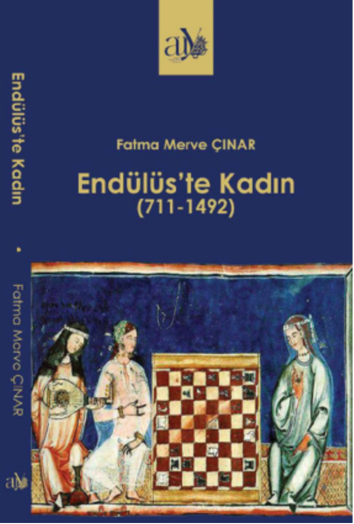
Fatma Merve Çınar, "Endülüs’te Kadın" , meticulously reconstructs the lives of woman by gathering clues scattered among the historical records of al-Andalus. Despite the limited sources available, she succeeds in presenting the lives of women as a holistic picture. Through the multilayered structure that Çınar has extracted from between the lines, we can trace women's place in the workforce and social life.
Fatma Merve Çınar, “Endülüs’te Kadın”, meticulously reconstructs the lives of woman by gathering clues scattered among the historical records of al-Andalus. Despite the limited sources available, she succeeds in presenting the lives of women as a holistic picture. Through the multilayered structure that Çınar has extracted from between the lines, we can trace women’s place in the workforce and social life.
The author emphasises that although a vast amount of data exists on the social structure of al-Andalus, information about the position of women remains limited due to the historiographical approach of the period. Primary reasons for this silence include the patriarchal social structure and the fact that history was predominantly written from a perspective focused on political and military power.
In the framework presented in this work, examining how women were named is essential for understanding the broader social landscape before moving into a more in-depth analysis. Indeed, these names contain the most concrete clues regarding women’s social roles. These naming conventions reflected in historical texts offer an extensive identity card, ranging from a woman’s lineage, hometown, and marital status to her area of expertise, social status, her master (if she was an enslaved person), ethnic origin, and even her age or whether she had children.
In the framework presented in this work, examining how women were named is essential for understanding the broader social landscape before moving into a more in-depth analysis. Indeed, these names contain the most concrete clues regarding women’s social roles. These naming conventions reflected in historical texts offer an extensive identity card, ranging from a woman’s lineage, hometown, and marital status to her area of expertise, social status, her master (if she was an enslaved person), ethnic origin, and even her age or whether she had children.
During this process, where Arabization and Islamization became widespread, it is noteworthy that the names of non-Muslim women continued to reflect their own cultures, while the adjective ḥurrah was used for free women who were not enslaved. The term amah, meaning female slave, replaced the title ‘abd used for men. For enslaved women, names representing flowers, precious stones, or physical and moral beauty were generally preferred; this contrasts with the tradition of derogatory naming found in regions like India, where class distinction was very sharp.
In a social structure where polygamous marriages existed, naming conventions that determined the status between wives were also included in the sources; for example, the title nafīsah, meaning the favourite wife, points to a distinction among spouses.
Following the conquests and marriages with Arabs, the names of non-Muslim women were preserved for a while so that their origins remained known; however, it was observed that the use of Arabic names became increasingly common in later periods. In light of all this data, it can be said that female names in al-Andalus are critical keys to reading the social, political, cultural, and religious fabric.
The visibility of women in working life has been meticulously categorized by the author according to their fields of activity. In rural areas, the role of women in agricultural production is described as more than just that of assistants; they personally carried out tasks such as silkworm breeding and the harvesting of flax and hemp. Compared to rural areas, there is much more detailed information regarding the professional lives of women living in cities. However, the participation of women in the workforce in al-Andalus was not uniform across every social class; women belonging to the elite class did not feel the need to work as they were free from financial concerns. Based on the data of the period, the author attributes the motivation for women to work not to a desire for economic independence, but sometimes to an unavoidable necessity and sometimes as a natural result of the education they received.
It is possible to say that the most common work environment for women throughout history has been the home. Women participated in economic life by marketing their home-based products or by providing services in the households of others. Citing Ibn Mughīth’s work al-Muqni’, Çınar presents the existence of legal documents such as the “contract for hiring a woman for domestic service” (wathīqat isti’jāri imra’ah li-khidmah al-bayt) as the most concrete evidence of the presence of free women in this sector. Similarly, sources of the period emphasize that women also took on tasks such as carrying water and preparing food. Indeed, Ibn ‘Idhārī drew attention to the physical risks faced by women performing these tasks in the Berber neighbourhoods of Córdoba during the reign of Caliph Hisham II. Narratives about a Black woman who died after falling while carrying food from the bakery to a house, and another woman who lost her life after losing her balance while carrying water from the river, reveal the vital risks these branches of work held for free women and that these jobs were areas of necessity. Although routine tasks like cooking and cleaning were traditionally carried out by the women of the household, it was frequently observed that these services turned into professional sectors in exchange for a fee.
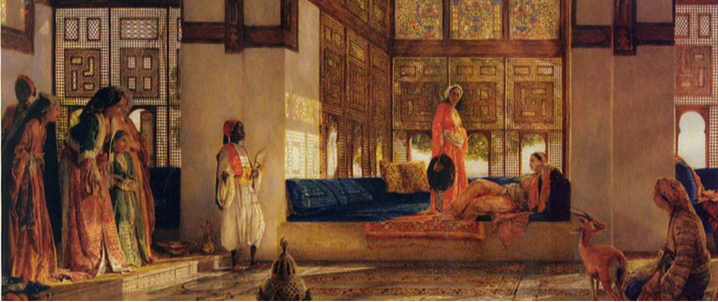
One of the areas where female labor was most dominant in al-Andalus was textile production. Particularly the processing, spinning, and weaving of raw materials such as wool and cotton formed the backbone of women’s economic activities within the household. These occupations not only met personal needs but also turned into a sustainable source of income. Another reason why these activities became so widespread among women was the fatwas issued within the framework of the jurisprudence of the period, which praised and encouraged women to work from home. On the other hand, women belonging to the elite class engaged in these fields as intellectual hobbies or distracting activities, perhaps because they had no financial necessity to join social life, or because their involvement in the outside world was not very well-received.
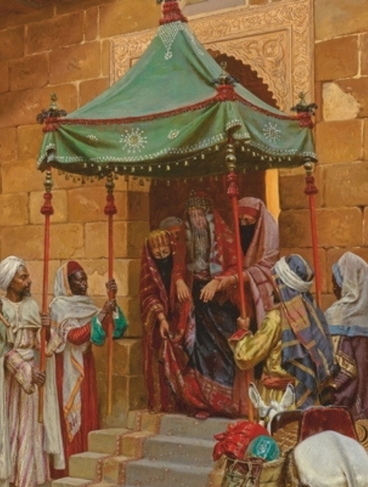
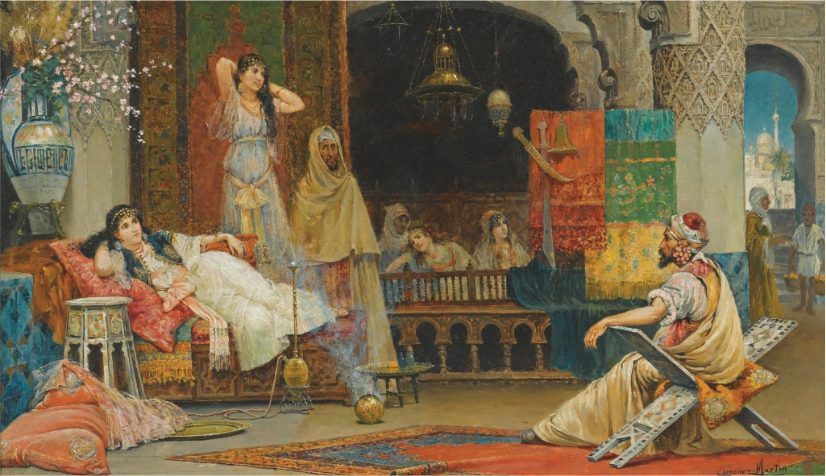
Women’s economic activities moved beyond the boundaries of the home and spread to public areas such as markets and bazaars. Regulations found in the legal texts of the period prove that free women personally sold their own products in markets or were part of the trade network. However, this situation was kept under strict control by market inspectors (muḥtasib) for the sake of maintaining social order. Although the boundaries of women’s presence in the public sphere were drawn by male authority, records reflected in the works of authors like Ibn ‘Abdurra’ūf show that rather than banning women from being in the bazaar, the focus was on disciplining this presence within the framework of social morality and order.
In al-Andalus, education stands out for free women not only as a status symbol but also as a professional area of expertise. Women who raised the children of the palace and elite families were defined in the literature as mu‘addibah (educator/governess). These women not only conveyed basic religious knowledge; they also took on high-level pedagogical roles in fields such as literature, grammar, and palace protocol. In fact, the record that Ibn Hazm did not associate with men until his youth and instead received his Qur’an and calligraphy training from female teachers, while also memorizing poetry, reinforces this fact. The existence of these female educators proves how female labour in al-Andalus became institutionalized in the intellectual field and turned into a respected profession accepted by the upper classes of society.
Another field of expertise directly linked to education is calligraphy and copying (istinsākh). Particularly in an intellectual center like Córdoba, the involvement of women in the processes of copying the Qur’ān and literary works stands out as both an artistic and economic pursuit. The data reveal that women’s skills in the art of writing were a natural result of the high-quality education they received, and this talent provided them with employment opportunities in libraries or educational institutions. This professional identity is one of the most concrete examples of how women in al-Andalus blended intellectual production with economic participation.
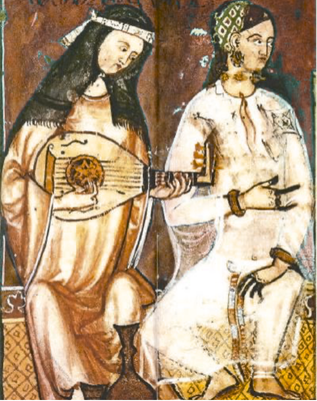
The data examined proves that free women in al-Andalus were not limited to domestic activities or physical labor in the markets; they existed as professional subjects in strategic state positions such as clerks (kātibah), library managers, and high-level educators. It is observed that female clerks, who managed official correspondence and displayed skill in calligraphy and the art of writing, were personally employed in the functioning of the palace bureaucracy and the construction of the state’s diplomatic language. This picture shows that even in a social structure centuries ago—which was patriarchal and lacked modern legal privileges—women were able to penetrate the center of the political mechanism through their merit and intellectual equipment, even as biased approaches toward high-level female employment are still seen today. This effective presence at the level of “ruler’s clerk,” embodied by figures like Lubnā, who lived during the reign of al-Ḥakam II, confirms that working life in al-Andalus was shaped by a professional female workforce, even in the most private and critical points of the state.
The health sector in al-Andalus was another professional field in which women, whether free or enslaved, could most directly apply their scientific knowledge. As emphasized in the text, midwifery (qābilah) was not limited only to the act of birth but became an expert profession reaching the level of “expert witness” in legal processes. Midwives were assigned critical missions ranging from identifying hidden defects in the sale of slaves to confirming pregnancy status before the courts. Sources indicate that medical science in al-Andalus almost turned into a family profession, passed down from generation to generation through women. The professional appointment of the daughter of the famous medical scholar Abū Marwān ibn Zuhr and his granddaughter, Umm ‘Amr, to treat the wives and children of the ruler at the palace is the most typical example of this institutionalized structure.
The defense of midwives’ rights against the relatives of patients who did not pay treatment fees—as reflected in the works of authors like Ibn ‘Abdūn—or the discussions of “treatment costs” in court records, confirms that this occupation was a professional source of income. Furthermore, the fact that midwives were mentioned not only for their medical competence but also with adjectives such as “just, auspicious, and trustworthy” reveals how medical ethics were shaped through female workers during that period.
On the other hand, free women built an independent service sector by specializing in areas such as wedding planning, beauty expertise, and jewellery rental. The economic presence of women was not limited to technical services; as mentioned in the records of names like Ibn ‘Abdūn and Ibn Ḥayyān, an artistic depth was added to social life through educated women turning music and art performance into a professional occupation.
Considering all this data, it is clearly seen that the working lives of free women in al-Andalus went far beyond domestic activities, contrary to common belief, spreading across a wide range from textiles to palace bureaucracy, and from medical science to the professional entertainment sector. The fact that women served as legal experts in fields like midwifery or took part in the most private points of the state mechanism with merit as clerks and advisors proves that the intellectual and economic fabric of al-Andalus was woven with female labor. While high-level female employment continues to be discussed even today, this professional presence displayed under the challenging conditions of centuries ago shows that women—with determination and expertise—have been an indispensable force in the social structure in every period.
However, it must also be considered that this productive picture in al-Andalus was shaped by the period’s traditional and social boundaries. The fact that women’s achievements were often recorded as “special cases” in historical sources reflects the prevailing norms of the time. The regulation of women’s presence in the public sphere within the framework of certain rules and discipline in the past can be read as a historical reflection of some social expectations that women face in modern business life today. These limitations, which we encounter in jurisprudential texts or in the traditional structures of the past, persist today, albeit in different forms. In this respect, the presence of the al-Andalus woman in working life is not just a success story; it is also a valuable reflection of the determined stance and labor that women have displayed throughout history on the path to becoming social subjects.
In conclusion, this work by Fatma Merve Çınar brings the silent subjects of history to light, adding a rich depth to the social heritage of al-Andalus. By gracefully blending many different sources—from jurisprudence texts to court records—the author makes visible the active roles of women in the construction of this ancient geography. This inclusive perspective offered by Çınar reminds us that women have excelled in every field of life, from science and art to management, and not just within the family. With this valuable study, Fatma Merve Çınar fills an important gap in the history of al-Andalus and provides us with a highly successful resource.